Introduction
You call a company with a straightforward billing question. After navigating a five-minute menu, you reach an agent who transfers you to another department — where you wait on hold and then have to repeat your account number, your name, and your problem from scratch. Sound familiar?
That experience isn't random. It's the direct result of a poorly designed call flow.
A well-structured call flow maps every step of the customer interaction so calls move predictably from entry to resolution — with less friction, fewer transfers, and fewer frustrated callers. Done well, it turns a chaotic routing process into a repeatable system callers can actually navigate.
This article covers what a call flow is, how it works step by step, the six most common types with examples, and the best practices your team can act on today.
Key Takeaways
- A call flow defines both the routing path a call follows and the framework agents use once connected
- Six core steps make up an effective call flow: initiation, greeting, information gathering, routing, agent interaction, and close or escalation
- Six primary call flow types each serve a different business need, from simple inbound routing to AI-driven voicebot designs
- Poor first-call resolution directly increases costs; SQM Group research puts the average FCR rate at just 70% across industries
- Regulated industries require compliance checkpoints (HIPAA, PCI) embedded directly into call flow design
What Is a Call Flow?
A call flow is a structured roadmap that determines how incoming calls move through a business or contact center — from the moment a caller dials in to the moment their issue is resolved or escalated.
As NICE describes it, call flows actually encompass two distinct dimensions:
- Call routing — the technical path that directs a call to the right agent, queue, or department based on predefined rules
- Agent guidance — the scripted framework that tells agents what to say, ask, and do once they're connected with a caller
Routing gets the caller to the right place; scripting ensures the agent handles them consistently once they arrive.
How those two dimensions are designed, though, varies considerably by context. A small retail business handling order inquiries needs something far simpler than a healthcare plan managing member enrollments. Regulated industries — healthcare, insurance, financial services — require additional layers: HIPAA identity verification checkpoints, PCI-compliant call recording controls, and documented disclosure steps that must occur at specific points in the interaction.
Businesses that struggle to match callers with the right agents at the right time see the consequences in their metrics: repeat contacts, longer handle times, and falling customer satisfaction scores.
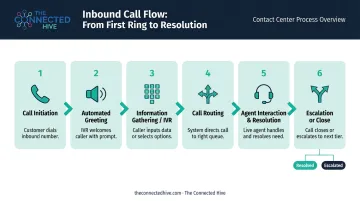
How a Call Flow Works: The Key Steps
Most call flows follow the same core sequence regardless of industry or complexity. Here's what happens from the moment a customer dials in.
Step 1 — Call Initiation
The caller dials in. The phone system receives the call and immediately activates the predefined routing logic — pulling in data like the caller's number, the time of day, and which number was dialed to determine the first decision point.
Step 2 — Automated Greeting
Before anything else, the caller hears a welcome message. This confirms they've reached the right business, sets expectations about wait times or available options, and may include basic information like business hours.
A clear, concise greeting reduces immediate hang-ups and signals that the experience ahead is organized.
Step 3 — Information Gathering / IVR Menu
The system (or an agent) collects key details — account number, call reason, language preference. This often happens through an IVR menu that asks callers to press a number or say a keyword.
This step pre-qualifies the call. When done well, it reduces agent handle time and ensures the right information is waiting before the agent even says hello.
Step 4 — Call Routing
Based on the data collected, the call routes to the most appropriate destination using predefined logic:
- Skill-based routing — matches callers to agents with relevant expertise
- Time-based routing — routes differently during vs. after business hours
- Geographic routing — directs based on caller location or regional team
Smart routing reduces unnecessary transfers and shorter hold times — both direct drivers of whether a caller stays patient or hangs up.
Step 5 — Agent Interaction and Resolution
The agent receives the call with context already displayed — via CRM integration — so they know who's calling and why before saying a word. No "can you repeat your account number?" The goal is first-call resolution: resolving the issue completely without a callback or transfer.
Step 6 — Escalation or Close
Once the agent has worked through the issue, every call ends one of two ways:
- Resolved: The agent confirms next steps and closes professionally
- Not resolved: The call escalates to a senior agent or specialist — with full context carried over, so the caller doesn't start from scratch
When context transfers cleanly — call reason, account details, steps already taken — escalations feel seamless rather than punishing.
Common Types of Call Flows (with Examples)
Different business scenarios require different call flow designs. Here are the six types most contact centers work with.
Standard Call Flow
The most straightforward type. An agent answers, greets the caller, verifies identity, identifies the issue, resolves it, and closes.
Sample dialogue:
"Thank you for calling Riverside Billing. This is Marcus. Can I get your account number to pull up your file?" [Caller provides info] "I can see the charge in question — let me walk you through what happened and get that corrected for you."
Best for businesses with predictable, manageable inquiry types — order issues, basic account questions — and moderate call volume.
IVR Menu Call Flow
An IVR presents callers with numbered options that route them automatically, without a live agent.
Sample menu:
"Thank you for calling Metro Health. For billing, press 1. For appointments, press 2. For prescription refills, press 3. For your physician's office, press 4. To speak with a representative, press 0."
The critical design rule: Keep menus to 3–5 options. J.D. Power research, cited by ICMI, found the IVR experience determines 33% of overall caller satisfaction. Long, nested menus undermine that score fast.
Time-Based Routing
Routes calls differently based on time of day or day of week. Live agents during business hours; voicemail or self-service after hours.
After-hours example:
"You've reached Oakwood Financial. Our offices are currently closed. Business hours are Monday through Friday, 8 a.m. to 6 p.m. Central. To leave a message, press 1. For account balance information, press 2. For emergencies, press 3."
Essential for businesses that can't staff 24/7 but still want to manage caller expectations outside office hours.
Skills-Based (Queue) Routing
Directs callers to the agent best qualified for their specific need — based on expertise, language, or product knowledge — rather than simply the next available agent.
The business case is straightforward: callers reach a specialist on the first transfer instead of a generalist who may need to pass them along. ICMI notes that skills-based routing can improve efficiency and service quality, particularly in environments with overlapping agent groups or complex routing contingencies.
Voicebot / AI-First Call Flow
An AI-powered voicebot handles the initial interaction — collecting caller information, answering common questions, and completing routine tasks like checking an account balance or updating contact information. A live agent enters only when the issue exceeds what the bot can resolve.
Gartner projects that by 2028, at least 70% of customers will use a conversational AI interface to begin a customer service journey. High-volume contact centers are already moving this direction to reduce agent workload and shorten wait times.
For businesses evaluating where AI fits, an honest assessment of current call volume, agent capacity, and customer tolerance for automation is worth completing before selecting a platform. The right entry point varies significantly by industry and call type.
Omnichannel Call Flow
Extends routing and handling logic beyond voice to include SMS, live chat, email, and social messaging — with a unified customer profile that carries context across every channel.
Without true omnichannel integration, each channel becomes a silo. A Genesys study of 5,232 consumers found that 97% said switching channels without losing context is important — yet only 16% of organizations reported fully integrated technology and data to support it. Nearly 70% of consumers reported frustration when agents lacked access to their prior interaction history.
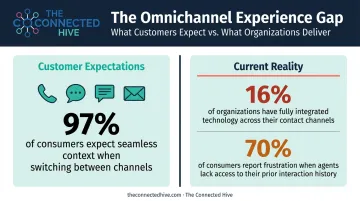
That gap between customer expectations and actual delivery is where most contact center technology evaluations begin — and where the choice of platform has the greatest downstream impact on CX outcomes.
Why Call Flows Matter: Key Benefits
Improved First-Call Resolution
Structured call flows get callers to the right agent with the right context on the first attempt — cutting transfers, callbacks, and repeat contacts. The cost of not achieving this adds up fast.
SQM Group research found that repeat calls consume 23% of the average contact center's operating budget. Their model estimates that a single one-percentage-point FCR improvement translates to roughly $286,000 in annual operating savings for a midsize contact center — plus a corresponding 1% increase in customer satisfaction scores.
Higher Agent Productivity and Consistency
Clear routing and scripting guidance removes guesswork. Agents handle more calls without sacrificing quality because they're not improvising on structure — they're focusing on the conversation.
There's an onboarding benefit too. Standardized call flows accelerate ramp time for new agents, since the framework tells them exactly what to do and say at each stage, even before they've built up call-handling instincts. That consistency doesn't stay internal — it shapes every interaction a customer has with your brand.
Stronger Customer Loyalty
Friction in the call experience has direct downstream consequences. Research from Qualtrics XM Institute and PwC puts the stakes in sharp relief:
- 53% of consumers would reduce spending after a bad customer experience (Qualtrics XM Institute)
- 29% stopped using a brand entirely following a poor service interaction (PwC)
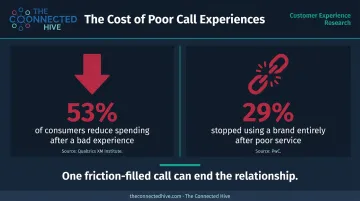
A well-designed call flow removes the most common friction points before they cost you a customer.
Call Flow Best Practices to Improve Performance
Map Your Most Common Call Types First
Before building any flow, audit inbound call data to identify your top five to seven call reasons. Design flows around those high-frequency types first. Trying to map every possible scenario at once leads to overly complex trees that are hard to manage and harder to update.
Keep IVR Menus Concise and Caller-Centered
- Limit options to 3–5 per menu level
- Use plain, everyday language — avoid internal department names callers won't recognize
- Always offer a path to a live agent
- Review and prune outdated options at least quarterly
A long or confusing IVR menu erodes caller trust faster than almost any other design failure.
Use Scripting as a Guide, Not a Cage
Provide agents with scripted language for greetings, authentication, required disclosures, and closings. Then allow room for natural conversation. ICMI recommends that agents be able to deviate from a script when appropriate — particularly in high-stakes interactions like healthcare member services or financial account disputes, where scripted rigidity can feel dismissive.
Scripted structure and natural delivery aren't mutually exclusive — the best flows make compliance invisible to the caller.
Build Compliance Checkpoints Into Regulated Flows
For healthcare, insurance, and financial services, compliance is embedded into the call flow itself — not bolted on at the end. Two requirements deserve particular attention at the design stage:
- HIPAA (45 CFR 164.514(h)): Identity and authority must be verified before disclosing protected health information to any requester not already known to the organization.
- PCI SSC: Sensitive authentication data (CVV/CVC) cannot be stored after authorization. Where recording systems can't prevent capture, that data must be deleted from the recording.
Getting either of these wrong is a regulatory exposure, not just a process gap. Both must be mapped to specific moments within the flow before a single call is taken.
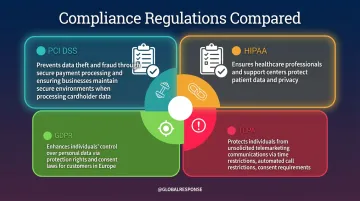
The Connected Hive has embedded this compliance lens directly into its vendor vetting process. With client experience spanning Humana, Blue Cross/Blue Shield, Discover, and Ameriprise, the firm evaluates every technology recommendation against PCI-DSS and HIPAA requirements before anything reaches a client's desk.
Review and Refine Continuously
Call flows are not static. As NICE recommends, set a regular review cadence and require a review whenever back-end systems, products, or policies change. Use call recordings, agent feedback, and routing data to identify where callers are dropping off, where transfers spike, and where scripts are generating more confusion than clarity.
Frequently Asked Questions
What is call flow in a call center?
A call flow is a structured process defining how incoming calls are routed through a contact center and how agents handle each interaction from greeting to resolution. It ensures consistent, efficient service delivery and reduces the chance of a caller being bounced between departments without resolution.
What are the steps of call flow?
The core steps are: call initiation, automated greeting, information gathering or IVR menu, call routing, agent interaction and resolution, and close or escalation. Each step builds on the previous one to move the caller toward resolution with minimal friction.
What are the main types of call flows?
The primary types are standard, IVR menu, time-based routing, skills-based routing, voicebot/AI-first, and omnichannel. The right design depends on your business size, call volume, and the complexity of interactions your team handles.
What makes a call flow effective?
Clear routing logic, concise IVR menus, flexible agent scripting, a first-call resolution focus, and regular reviews using real call data. In regulated industries like healthcare or financial services, compliance verification checkpoints are equally non-negotiable.
How often should a business update its call flows?
At minimum, quarterly. Beyond that, update immediately when products, pricing, policies, compliance requirements, or staffing changes affect how calls should be handled or routed.